
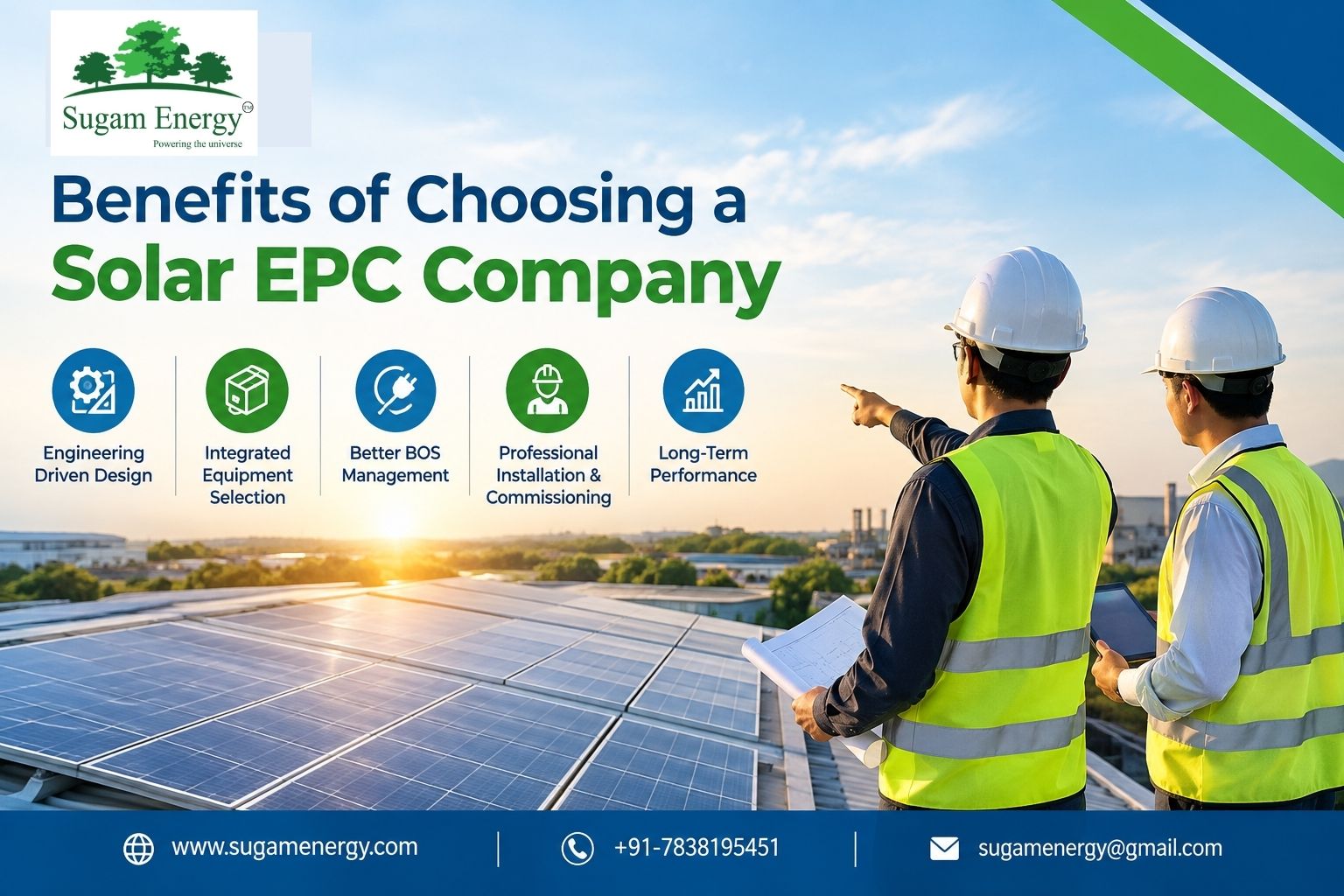
The installation of solar energy plants is a long-term energy investment and not just a case of setting up the solar panels on rooftops or land areas. The design of the system, type of equipment, integration of electricity, installation, and commissioning affect the efficiency of energy generation by the plant.
EPC is the abbreviation for Engineering, Procurement, and Construction. An EPC solar company offers a complete service for solar projects, minimizing the number of contractors required for various technical aspects of the process.
This is why companies and industrial organizations are partnering with the best Solar EPC Company to get a comprehensive solution to their needs.
What Is a Solar EPC Company?
It could encompass the evaluation of the site, the design of the solar power plant, energy yield calculations, module and inverter selection, electrical design, mounting system, cabling, earthing, protection system, and installation.
5 Key Benefits of Choosing a Solar EPC Company:
1. Engineering-Driven Solar System Design:
A good technical design for a solar power plant forms its foundation. An EPC team can conduct a study on electricity needs, space availability, shading, orientation, irradiance, rooftop/ground conditions, and power grid connection needs before arriving at the system configuration. This ensures that the capacity installed is well-matched to the energy needs of the location.
2. Integrated Equipment Selection:
Solar modules alone do not determine plant performance. It is necessary for inverters, DC and AC cables, mounting structures, connectors, protection apparatus, transformers, and other systems to interact effectively.
The technical configuration is established by an experienced solar EPC company taking into account all the necessary factors.
3. Better Balance-of-System Management:
There are other components that are part of BOS that are equally important. These include cable sizing, connectors, earthing, surge protection, mounting structure, and electrical protection. EPC-driven execution of the system would help manage all of these better.
4. Professional Solar Installation & Commissioning:
A properly designed solar power plant may underperform because of a poor installation process. The alignment of modules, cables, cable termination, earthing, structural installation, inverter connection, and testing of the protection system need to be properly done.
This is done by an experienced EPC team based on the engineering drawings before energizing and commissioning the plant.
5. Focus on Long-Term Solar Performance:
Installation capacity is just one of the parameters that should not be used alone in measuring the success of a solar project. Generation of energy, losses, availability of the plant, monitoring, safety, and reliability are just as important.
A good Solar EPC Company takes into account all of these factors in designing and executing their projects.
Conclusion:
At Sugam Energy, solar EPC is conducted through proper coordination in engineering, procurement, and construction of the project. Right from project planning to design, procurement, installation, wiring, testing, and commissioning of the project, all these require technical accuracy.
For commercial and industrial firms that wish to go solar, selecting a Solar EPC Company can make the process of project execution much easier for them.
Frequently Asked Questions (FAQs):
A Solar EPC Company manages the complete solar project, including engineering, procurement, installation, testing, and commissioning.
It ensures coordinated system design, equipment selection, installation, and grid integration for reliable solar plant performance.
Through accurate system sizing, quality components, proper installation, and efficient electrical and structural design.
Sugam Energy provides integrated solar EPC solutions covering project design, procurement, installation, testing, and commissioning.