
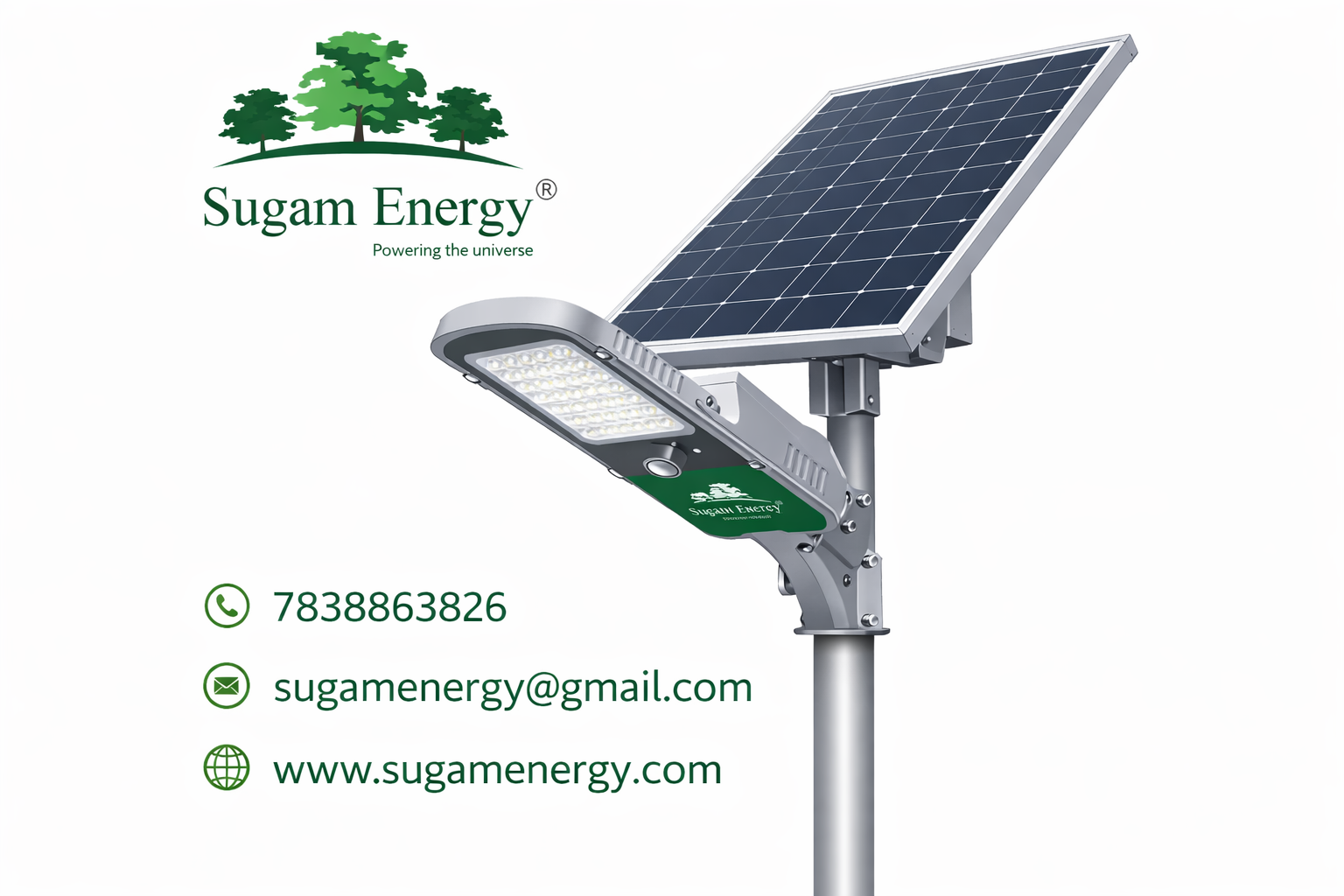
If you walk through an industrial park, a factory road, or even a school campus at night, one thing quickly becomes clear: good lighting matters. Workers need to move safely, security teams need clear visibility, and vehicles must travel without risk.
For many businesses and government projects, solar lighting is now becoming the smarter choice. Instead of depending on electricity from the grid, these lights use energy from the sun.
- During the day, the solar panel collects sunlight.
- At night, that stored energy powers the light.
One solution among such lights is an all-in-one solar street light that consists of a solar panel, a battery, an LED light, and a controller in one compact unit. Because everything is in one body, the system becomes easier to install and manage. Many businesses prefer working with an experienced Solar All-in-One Street Light Manufacturer that understands project requirements and recommends the right system.
Let’s look at certain points that you should check before selecting a solar street light.
Understand Your Project First
Understand the project clearly before choosing any lighting system. Think about where the lights will be installed. A small pathway inside a park does not need the same lighting as a busy industrial road.
Ask questions like:
- Where will the lights be installed?
- How wide is the road or open area?
- How many poles will be needed?
- Does the location get strong sunlight every day?
Once these points are clear, selecting the right lighting system becomes much easier.
Pick the Right LED Brightness
Brightness in solar street lights mostly depends on LED wattage. Different places need different brightness levels. Using very powerful lights in a small area wastes energy, while low-power lights may not provide enough visibility.
Here is a simple way to think about it:
- Go for 12W – 20W lights if you are choosing one for gardens, parks, and small lanes
- If residential streets are your target, then choose op for 30W – 40W lights
- 60W – 100W lights are perfect for factory roads, highways and large open spaces
Check the Solar Panel Size
It is good to check the capacity, efficiency and charging needs of the panel.
Performance during cloudy weather
A slightly larger or better-quality panel often improves reliability, especially in locations where sunlight is not always strong.
The solar panel collects sunlight and converts it into electricity. If the panel is too small, the battery may not charge fully. When that happens, the light may not last the whole night.
Pay Attention to the Battery
The battery stores the energy collected during the day. At night, this stored energy powers the LED light.
Because of this, battery quality is extremely important.
Many modern systems now use lithium batteries. These batteries charge faster and usually last longer than older battery types. Before finalising a product, buyers should review battery capacity, number of charging cycles and night-time backup hours.
Make Sure the lights run all night
Street lights usually need to operate from sunset to sunrise. This is called a dusk-to-dawn operation. In most projects, lights should work around 10 to 12 hours every night. When reviewing product specifications, check total operating hours, backup support for low sunlight days and energy-saving modes.
A reliable solar all in one street light manufacturer designs systems that can provide consistent night-long lighting.
Look for Smart Features
Solar lighting technology has improved a lot in recent years. Many systems now include smart features that help save energy. These features may include: automatic on/off sensors that detect sunset and sunrise, motion sensors to increase brightness when people or vehicles pass, and dimming modes during low-traffic hours
These features help the system use energy more efficiently and extend battery life.
Check the Quality
Street lights stay on all year. They face rain, dust, heat, and sometimes strong winds. Good solar street lights often include strong aluminium housing, rust-resistant materials, and a waterproof design.
Understand the Installation Process
One big advantage of all-in-one solar street lights is easy installation. Since the solar panel, battery, and light are already combined, installers usually need only a few things:
- A lighting pole
- Mounting brackets
- Correct direction toward the sunlight
Unlike traditional street lights, there is no need for underground wiring or electrical cabling. This reduces installation time and lowers project costs.
Final Thoughts
Solar all-in-one street lights are becoming a practical choice for modern infrastructure. They provide reliable lighting without depending on grid electricity. Because the solar panel, battery, controller, and LED come with one compact unit, installation is simple, and maintenance is minimal. Call Sgam Energy if you need more information about solar all-in-one street lights.